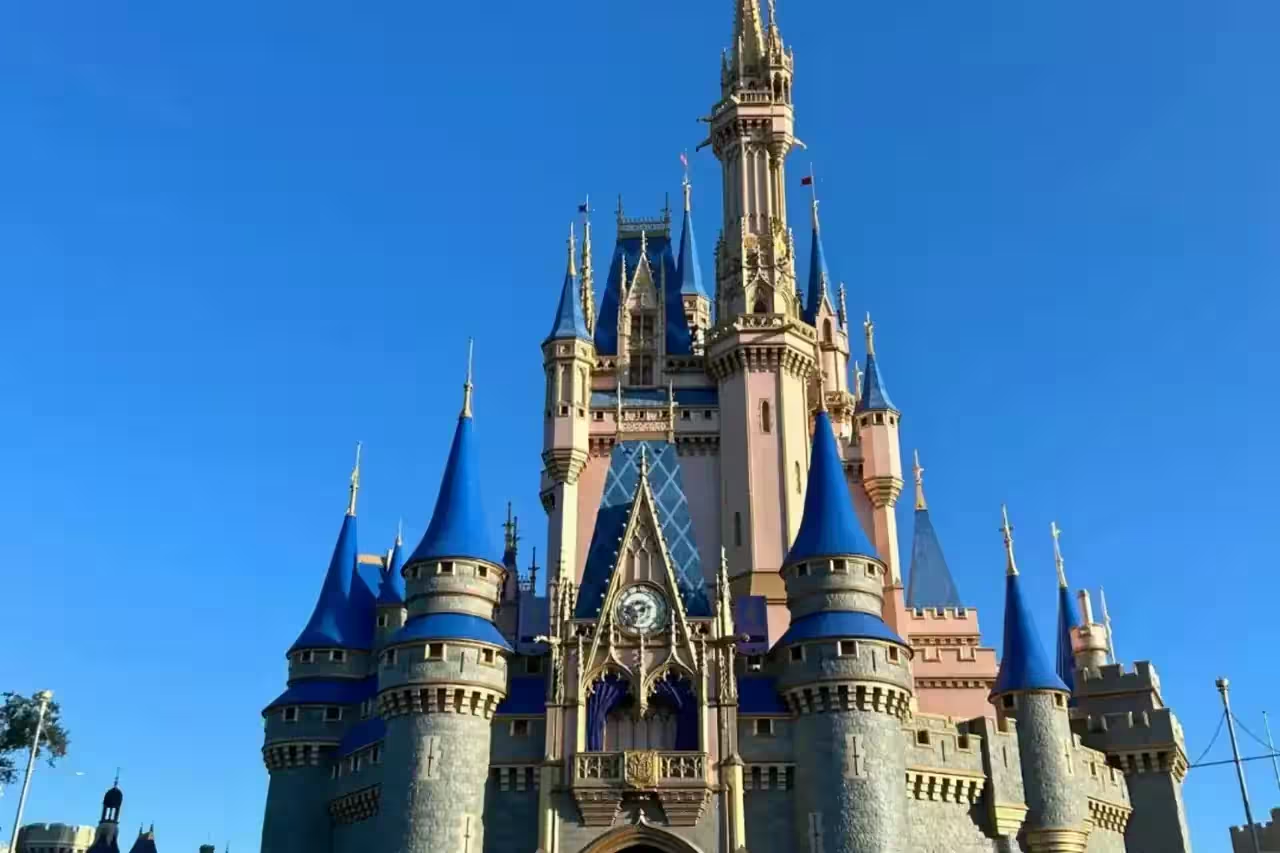
Disney World can be an incredible experience for kids with autism when you plan around sensory needs, register for DAS in advance, build in real break time, and choose the right resort. A Certified Autism Travel Professional can handle all of this for you — and you won't pay more than booking it yourself.
Also see: best Caribbean cruises for autism families — how Disney Cruise Line compares to Royal Caribbean and Celebrity for autism accommodations.
Also: Disney Cruise Line for families — the ship format is often easier for sensory-sensitive kids than the parks. A Certified Autism Travel Professional's honest take.
Considering Universal on your Orlando trip? See: Epic Universe 2026 guide — all five worlds, height requirements, and how to combine with Disney.
I'm going to tell you something most Disney planning guides won't: Disney World can be incredible for kids on the spectrum. It can also be a disaster. The difference isn't luck. It's preparation.
I know because I've lived both versions. I'm a mom of two kids on the autism spectrum, a Rockford-area travel advisor, and an IBCCES Certified Autism Travel Professional. I plan Disney vacations every week for families like mine across Northern Illinois and the Stateline region. The strategies in this guide aren't theoretical — they've been tested on real trips, with real kids, in real meltdown situations.
This guide covers everything: DAS registration (including what changed in 2025 and where things stand now), resort selection, park-by-park sensory planning, Lightning Lane strategy, pacing, safety planning, and the mindset shift that makes the whole thing work. Including what's actually open and closed in 2026.
Start Here: The Mindset That Changes Everything
Before we talk logistics, we need to talk expectations.
The Disney trips you see on Instagram — the matching family shirts, the kids hugging every character, the sunset Castle photo — that might not be your family's trip. And that's okay.
Success at Disney with an autistic child looks different. Maybe it's your kid trying a ride they were afraid of and grinning the whole time. Maybe it's one calm meal where everyone sits together. Maybe it's a full park day without a meltdown — or maybe it's leaving at 11 a.m. and spending the afternoon at the pool, and calling that a win.
I plan with that mindset. Realistic expectations. Built-in flexibility. And zero guilt about doing Disney "your way."
Is Disney a Good Fit for Your Child?
This guide assumes you're planning a Disney trip — but the most useful thing I can do is help you decide if it makes sense at all.
Disney tends to work well if your child:
- Is engaged by characters, familiar IP (Frozen, Cars, Star Wars, Encanto), visuals, or rides — even from a distance or a screen
- Can handle structured stimulation with planned breaks and a predictable daily rhythm
- Benefits from advance preparation — visual schedules, ride previews, social stories — and does better once the environment becomes familiar
- Has queue tolerance that can be accommodated through DAS, Rider Switch, or strategic timing
Disney may not be the best fit right now if your child:
- Has severe sensory sensitivity to crowds and noise that isn't manageable even with breaks — the parks are never quiet
- Cannot tolerate any waiting, even outside a conventional queue — DAS redirects the wait, it doesn't eliminate it
- Needs a consistently low-stimulation environment for most of the day
If Disney sounds right for the first list but you're uncertain about the second — that's exactly the conversation I have with families before they book anything. Sometimes the answer is "yes, with the right strategy." Sometimes it's "not yet." And sometimes it's a cruise or a different destination that would actually be a better first trip. I'd rather help you make the right call than sell you a trip that doesn't fit.
Disney Alternatives When Another Trip Makes More Sense
I work with Disney every week. I still tell families when it's not the right fit.
- Cruises. Contained environment, predictable daily schedule, the cabin always close. Royal Caribbean's Autism on the Seas program brings trained staff and sensory programming to specific sailings. See why autism families are choosing cruises over theme parks.
- All-inclusive resorts. One contained property, meals included, no commuting, lower sensory intensity. Properties like Beaches Resorts have IBCCES certification.
- Great Wolf Lodge. No flights, everything under one roof, and a good first trip to see how your family travels together before committing to something bigger.
What a Successful Disney Trip with an Autistic Child Actually Looks Like
A successful Disney trip with an autistic child might look like:
- Two or three rides in a morning session, then back to the resort pool by noon
- One character meet that went better than expected, and two that you skipped because the queue looked wrong
- Leaving a park at 10 a.m. on day two because your child had already hit their limit — and the afternoon at the resort turned out to be everyone's favorite part
- Repeating the same ride four times because your child loved it
- Skipping fireworks and watching them from the resort balcony at a distance instead
- A dinner where everyone ate something they recognized and nobody melted down
The goal is a trip where your family makes real memories — and actually wants to go back. That almost always requires doing less, not more.
How Much Does a Disney World Trip Cost for an Illinois Family?
Disney is expensive. For a Rockford-area or Northern Illinois family of four — flights, 5 nights at a moderate resort, 4-day tickets, food, and Lightning Lane on busy days — a moderate trip runs $7,000–$9,500. A value resort, off-peak timing, and careful food choices can bring that down to $4,500–$6,000. Premium choices push well above $12,000. See the full Disney vacation cost guide for Northern Illinois families — including 2026 deals currently available.
Best Time to Visit Disney World with an Autistic Child
For autism families, crowd level is the single biggest variable affecting trip success. A moderate Tuesday in January feels like a completely different destination than a packed Saturday in July.
Best windows for autism families right now:
- Early January through early February (avoid Marathon Week — typically the second full week of January)
- First two weeks of February (skip Presidents' Day weekend)
- Late August through late September
- Early November (before the peak holiday rush)
Beyond crowds: Florida's summer heat adds a real sensory stress layer. Late fall and early spring are the sweet spot — mild temps, lower crowds. Avoid four consecutive park days. I recommend no more than two park days in a row, with a rest day (pool, resort, Disney Springs) in between. Every time.
Disney DAS Pass for Autism: What You Need to Know in 2026
DAS is Disney's accommodation for guests who can't wait in conventional queues due to a developmental disability like autism. It's not a "skip the line" pass — it's a return-time system that lets your family wait somewhere other than a traditional queue.
Disney overhauled DAS in May 2024, and it has continued to evolve. Here's the current state:
Who It's For
DAS is primarily intended for guests with developmental disabilities like autism that make waiting in traditional queues difficult. Disney's language specifies this is about functional impact — how the disability affects your ability to wait — not the diagnosis itself.
One notable shift: in January 2025, Disney quietly removed the word "only" from its DAS language. The program previously stated it was "intended to accommodate only those Guests who, due to a developmental disability like autism." That word is now gone. The practical impact on approvals is still being watched, but the language signal is worth knowing.
How to Register
You register through a live video chat up to 60 days before your park visit. The guest requesting DAS (or the parent registering for a minor child) must be 18+. The person DAS is being requested for must be present on the video chat. You'll discuss your child's specific challenges with a Cast Member and, in some cases, a contracted healthcare professional.
How Long It Lasts
Once approved, DAS registration is valid for up to one year or the length of your ticket, whichever is shorter. Once you visit with a valid registration, you'll need to re-register for your next trip.
How It Works in the Parks
Once registered, you select one return time at a time through the My Disney Experience app. When your return time arrives, your party enters through the Lightning Lane entrance. No limit on how many you can use per day. No need to purchase Lightning Lane Multi Pass or any add-on.
What to Prepare for the Video Chat
Have your My Disney Experience account set up and linked to your park tickets before starting the chat. The guest who needs DAS must be visible on camera.
Disney's team isn't looking for a diagnosis label. They're looking for functional descriptions. Saying "my child has autism" isn't enough. You need to explain how your child's autism specifically affects their ability to wait in a queue. Think about: Does your child elope when overwhelmed? Do enclosed spaces or crowds trigger meltdowns? Can your child tolerate 45 minutes of standing with strangers in a dim, noisy room? What happens when the wait is longer than expected? The more specific and practical your descriptions, the better. I coach families through this before their video chat — see the full DAS step-by-step guide updated March 2026.
Disney Disability Accommodations Beyond DAS
Rider Switch
If your child doesn't want to ride — or can't handle a particular attraction — Rider Switch lets your family take turns without anyone waiting twice. No DAS registration. No advance sign-up. Request it at the attraction entrance with your entire group present. This is one of the most underused tools for autism families. Use it liberally.
Stroller as Wheelchair Tag
If your child uses a stroller as a mobility device — including for elopement risk or sensory regulation — you can get a "Stroller as Wheelchair" tag from Guest Relations at any park. The tag lets you bring the stroller into attraction queues, onto buses without folding, and into buildings where strollers are normally prohibited. For many autism families, the stroller is the child's safe space — pulling the sunshade down creates a visual and sensory cocoon. Get the tag at Guest Relations in whichever park you visit first. No proof of diagnosis required.
Lightning Lane — What It Actually Is and How to Use It
Lightning Lane is Disney's paid queue-skipping system. It exists in two forms:
Lightning Lane Multi Pass (LLMP): A per-person, per-day purchase (typically $15–$35 depending on date) that lets you book one return time at a time for a selection of standard attractions. You can book your first selection at park opening, then the next once you've used it or after 2 hours, whichever comes first.
Lightning Lane Single Pass (LLSP): A separate, per-ride purchase for highest-demand attractions — things like Guardians of the Galaxy and Star Wars: Rise of the Resistance. These sell out fast. Prices vary by date and demand, typically $7–$30 per person per ride. They're bought individually, not bundled.
For autism families without DAS: LLMP combined with rope-drop timing for one or two big rides can give you a very workable day. You won't get everything — but you'll get the things that matter, with minimal standby queue exposure.
Attraction Queue Re-Entry
If your child is in a queue and needs to leave — for a bathroom break, a meltdown, or any other reason — let a Cast Member know at the time. You can leave and return without losing your place.
Single Rider Queues
For older spectrum kids or teens who can ride independently, Single Rider queues are often shorter than standby and contain fewer sensory elements. Available at select attractions including Expedition Everest and Test Track.
Early Entry and Extended Evening Hours
Disney resort guests get 30 minutes of Early Entry before the parks open to day guests. This is prime time for autism families — lowest crowds, coolest temperatures, shortest waits. Build your strategy around these windows.
First Aid Stations as a Sensory Reset Space
Every park has a First Aid station. They're also a legitimate quiet retreat — air-conditioned, private, with cots and calm staff. For older children who've outgrown Baby Care Centers, First Aid is an option for a full sensory reset when quiet spots in the park aren't enough.
Best Disney World Resorts for Autism Families
The room matters more than the tier. Here's what I look for:
Space
A 260-square-foot Value room with two double beds is tight for any family — for a family that needs decompression space, it can be claustrophobic. I typically recommend:
- Art of Animation family suites — 520 sq ft, separate sleeping area, Finding Nemo or Cars theming that many spectrum kids love
- Fort Wilderness cabins — private, quiet, full kitchen, outdoor space
- Any Moderate or Deluxe with a separate living area
Note: Animal Kingdom Lodge Jambo House rooms are under refurbishment beginning May 2026 through early 2027 — factor that in if you're considering this resort.
Room Location
Away from elevators, ice machines, and high-traffic hallways. Interior rooms for light-sensitive kids. Lower floors for families who might need a quick exit. I request specific room locations based on your child's needs.
Sensory Environment
Some resorts are louder and busier than others. The All-Star resorts have heavy foot traffic. Port Orleans Riverside is dramatically quieter. Animal Kingdom Lodge's savanna-view rooms offer a calming visual buffer.
Transportation Predictability
Bus waits are unpredictable — and for kids who rely on routine, a 5-minute wait that turns into 25 minutes can spiral. I recommend Skyliner-connected resorts (Caribbean Beach, Pop Century, Art of Animation) for EPCOT and Hollywood Studios access, or monorail-connected resorts for Magic Kingdom. If buses are a sensory challenge, Uber or Lyft runs $5–$15 between resorts and parks.
Kitchen Access
If your child has food restrictions or sensory eating challenges, a room with a microwave or kitchenette is a game-changer. Stock familiar foods and avoid the "nothing on this menu works" panic at mealtime.
What to Pack: The Sensory Toolkit
Your park bag is just as important as your itinerary. These are the items I never leave the resort without:
- Noise-canceling headphones or earmuffs
- Fidget and stim toys (stress balls, chewable necklaces, textured items, spinners)
- Sunglasses
- A portable fan or misting fan
- A change of clothes
- A comfort item — not a beloved irreplaceable item, but something familiar that signals safety
- Snacks your child will actually eat — Disney allows outside food
- Visual schedule and social stories (printed or on a tablet)
- An ID bracelet or tag — especially for non-verbal children or kids who elope
Disney Elopement Safety Planning for Autistic Kids
If your child is a runner or prone to wandering, safety planning for Disney deserves its own section.
ID and Contact Information
Every child should have visible identification with a parent's phone number. Options include medical ID bracelets, iron-on or clip-on shoe tags, temporary tattoos with your phone number (companies like SafetyTat make these specifically for theme parks), or a lanyard with contact info.
GPS Tracking
For kids with significant elopement risk, a GPS tracker provides real-time location if your child gets separated. AngelSense is widely used in the autism community — it offers non-removable wearing options and an auto-answer speakerphone. Other options include the Jiobit and Apple AirTags as a backup. Note: MagicBands are not GPS devices.
Disney's Lost Child Protocol
Cast Members have a specific protocol for separated children. You can proactively share information about your child — that they're non-verbal, have autism, what they're wearing — at Guest Relations when you arrive. First Aid stations and Guest Relations are your first stops if your child is separated.
Establish a Meeting Point
Pick a specific spot on the map in each park to meet if your party gets separated. Show it to your child when you arrive and reinforce it throughout the day. For non-verbal children, this may not be practical — which makes the ID and GPS strategies even more important.
Disney World Sensory Guide by Park: What to Expect at Each One
Magic Kingdom — Moderate–High Sensory Level
The environment: The most-visited park in the world. The hub area around the castle is the sensory hotspot — music, PA announcements, performers, dense crowds. Worth planning carefully.
Best for spectrum kids:
- Fantasyland dark rides — Many Adventures of Winnie the Pooh, Peter Pan's Flight, The Little Mermaid
- Tomorrowland Speedway and The PeopleMover — calm and predictable
- Pirates of the Caribbean — dark and cool. Some kids find it soothing; others struggle with the darkness. Know your child.
- Carousel of Progress — calm, air-conditioned, slow-paced show. Perfect sensory reset.
2026 closures to know:
- Big Thunder Mountain Railroad — CLOSED since January 2025, expected to reopen early May 2026. Check before your visit.
- Buzz Lightyear's Space Ranger Spin — REOPENING APRIL 8 — closed since August 2025, reopening April 8, 2026 with updated vehicles, new character Buddy, and upgraded blasters.
- Walt Disney World Railroad — operating as a limited shuttle between Main Street and Fantasyland only.
Quiet spots & break areas:
- Tom Sawyer Island — accessible by raft, feels like a different world
- Hall of Presidents lobby — air-conditioned, bench seating, almost always uncrowded
- Outdoor areas of Liberty Square
- Walkway between Adventureland and Frontierland
- Carousel of Progress (a calm show in itself, with air conditioning)
Baby Care Center: End of Main Street near the Crystal Palace. Air-conditioned, quiet, private rooms — excellent for a full sensory reset.
EPCOT — Low–Moderate Sensory Level
The environment: Lower than Magic Kingdom. Wide pathways, spread-out layout, more outdoor space. World Showcase is particularly low-key.
Best for spectrum kids:
- The Seas with Nemo & Friends — the aquarium afterward is calming and self-paced
- Spaceship Earth — slow, air-conditioned, enclosed
- Remy's Ratatouille Adventure — screen-based, gentle motion
- Living with the Land — calm boat ride through greenhouses
- Journey of Water, Inspired by Moana — self-paced interactive water trail, no queue to enter
- Soarin' Across America — NEW Summer 2026. A new version of Soarin' with updated American vistas opening by Memorial Day 2026. One of the best new additions for spectrum kids in years — gentle simulated flight, wide screen, predictable format.
Watch out for:
- Guardians of the Galaxy: Cosmic Rewind — intense, unpredictable motion, loud
- Test Track — loud engine noises, speed
Quiet spots & break areas:
- Gardens behind Spaceship Earth
- UK Pavilion English garden — hedge maze with benches
- Morocco Pavilion secluded courtyards with fountains
- Norway Stave Church Gallery — dim, air-conditioned, almost always empty
- The Seas aquarium viewing areas
- Pixar Short Film Festival theater — dark, air-conditioned, rarely crowded
Baby Care Center: World Celebration area near the Odyssey building.
Hollywood Studios — High Sensory Level
The environment: Compact park that concentrates crowds. Galaxy's Edge and Toy Story Land are the sensory hotspots. The park is also in a significant period of construction and transition.
Best for spectrum kids:
- Toy Story Mania — predictable, screen-based, fun
- Millennium Falcon: Smugglers Run — as of May 22, 2026, features a new Mandalorian & Grogu mission with upgraded technology
2026 closures & changes to know:
- MuppetVision 3D — PERMANENTLY CLOSED since June 2025. If you've seen older guides recommending this as a quiet, low-stimulation option — that attraction is gone.
- Rock 'n' Roller Coaster — CLOSED permanently closed March 2, 2026. Being transformed into Rock 'n' Roller Coaster Starring The Muppets, targeting summer 2026 reopening.
- Animation Courtyard — PERMANENTLY CLOSED being transformed into Walt Disney Studios Courtyard. First phase opens May 26, 2026. The old "Animation Courtyard quiet area" no longer exists.
- Mama Melrose's, PizzeRizzo — PERMANENTLY CLOSED
Quiet spots & break areas (updated): With MuppetVision's courtyard and Animation Courtyard gone, quiet options at Hollywood Studios have genuinely shrunk. Current options:
- Echo Lake — walkway around the lake, benches, shade, generally more laid back
- Backlot Express patio area — shaded seating during non-peak hours
- Sunset Boulevard near the Beauty and the Beast theater (between show times)
- First Aid station near the front of the park — a legitimate sensory retreat when the park itself isn't cutting it
Sci-Fi Dine-In Theater note: Remains one of the darkest, quietest dining environments at Disney. But it's one of the hardest reservations to get (books out at 60 days), and the enclosed car booths can feel claustrophobic for some kids. Know your child before pursuing this reservation.
Baby Care Center: Near the Guest Relations building at the front of the park.
Animal Kingdom — Lowest Sensory Level of the Four Parks
The environment: Wide pathways, heavy tree canopy, natural theming, lower crowd density. Many families I work with say Animal Kingdom is their most successful park day. Start here if this is your family's first Disney trip.
Best for spectrum kids:
- Kilimanjaro Safaris — outdoor, open vehicle, real animals
- Maharajah Jungle Trek and Gorilla Falls Exploration Trail — self-paced, calm, animal-focused
- Na'vi River Journey — gentle, immersive boat ride (note: the queue can be dark and enclosed; use DAS or rope-drop)
- Tree of Life garden walkways — shaded, often uncrowded
2026 closures & changes to know:
- DINOSAUR — PERMANENTLY CLOSED February 2026 and DinoLand U.S.A. with it. Being transformed into Tropical Americas (opening 2027), featuring Encanto and Indiana Jones attractions.
- The Boneyard playground — PERMANENTLY CLOSED
- Rafiki's Planet Watch / Conservation Station / Wildlife Express Train — CLOSED since February 23, 2026 to prepare for Bluey's Wild World. If you've seen guides recommending Conservation Station as a calm break destination — that area is currently inaccessible.
- Bluey's Wild World — NEW May 26, 2026. Bluey and Bingo meet-and-greet, dance party, and petting area. High-interest for younger spectrum kids who love the show.
Quiet spots & break areas:
- Maharajah Jungle Trek — multiple quiet locations throughout the trail
- Pathway near Caravan Road leading to Africa
- Tree of Life garden area — shaded and often uncrowded
Baby Care Center: Near Creature Comforts (the Starbucks) on Discovery Island.
How to Build a Sensory-Friendly Disney World Itinerary
The biggest mistake families make is trying to do a full 8–12 hour park day. More time in the park is not more value. For sensory-sensitive children, accumulated stimulation is the enemy.
Morning Block (Park Open to 11 a.m.)
Prime time. Lowest crowds, coolest temperatures, highest energy. If you're staying on property, use Early Entry — those 30 minutes before the park opens can be the calmest window of your entire trip. Hit your priorities here.
Midday Break (11 a.m. to 2–3 p.m.) — Non-Negotiable
Leave the park. Go back to the resort. Swim, rest, eat familiar food in your room, watch a show. This is not wasted time — this is what makes the afternoon possible. The families who skip this are the ones who have a catastrophic afternoon. Every time.
Afternoon Block (3–5 p.m.)
Return if energy allows. Lower expectations. One or two more rides, a character meet, maybe a snack — not a full assault on the park.
Evening Decision
Some kids do great at night — cooler, calmer, magical. Others are done by 5 p.m. I plan for both, so your family can call an audible without feeling like the day was a failure.
The prep that starts before you pack: Visual schedules for every day. Walkthrough videos of rides your child might try. Photos of the hotel room, the bus, the park entrance. Social stories about transitions. Do this weeks before the trip so your child arrives with a mental map of what's coming. Surprises aren't exciting for most spectrum kids — they're threatening. Preparation is the single most powerful accommodation you can provide.
Disney World Food Strategies for Sensory Eaters and Picky Kids
If your child eats five foods and three of them aren't on any Disney menu, you're not alone.
- Pack familiar snacks. Disney allows outside food. Granola bars, crackers, favorite chips — this is your safety net, not an afterthought.
- Quick-service over table-service. Less wait time, less sensory input, more menu flexibility. Some locations will prepare simple off-menu items if you ask.
- Mobile ordering. Order through the My Disney Experience app and skip the line entirely. This is the single best dining tool for spectrum families. Use it at every quick-service meal.
- Communicate dietary needs in advance. Disney can accommodate most food allergies and intolerances. Ask to speak with the chef — they're generally very accommodating.
- Avoid character dining unless your child specifically wants it. Characters approaching the table uninvited, loud music, costumed characters in your personal space — it's a lot.
When Things Don't Go as Planned
They won't. And that's okay.
I've left a park three hours in with my own kids. I've watched a perfectly planned day unravel because of a queue layout change. I've eaten chicken nuggets from the resort food court for the fourth night in a row because the restaurant was too loud.
- Know your nearest break area at all times. Before walking into any section of a park, mentally note where the closest quiet spot, Baby Care Center, First Aid station, or companion restroom is.
- Have a "done" signal. A family code word that means "we need to leave now, no discussion." This removes the negotiation and guilt from the decision.
- Don't power through. If your child is dysregulated at 10 a.m., leaving at 10:15 and spending the day at the resort pool is not a failure. It's a smart pivot that saves the rest of the trip.
- Ask Cast Members for help. If you're struggling, tell a Cast Member. In my experience, they are overwhelmingly understanding and trained to help.
The families who have the best Disney experiences aren't the ones whose trips go perfectly. They're the ones who plan for imperfection and extend grace — to their kids and to themselves.
Common Mistakes Autism Families Make at Disney World
- Trying to do full 8–12 hour park days. A family that does three focused hours in the morning and leaves is almost always happier than the one that powers through until 9 p.m.
- Over-relying on DAS without a backup plan. DAS approval is no longer guaranteed. Plan for both scenarios from the start.
- Skipping the midday break. Every time. Two hours at the resort between 11 a.m. and 2 p.m. is the single highest-leverage thing you can do for your trip's second half.
- Not understanding Lightning Lane before you arrive. Knowing how LLMP and LLSP work before you're standing in the park is the difference between a manageable day and a frustrating one.
- Choosing the wrong resort. The resort is your base and retreat — it needs to work for your child's specific needs.
- Traveling during peak weeks. Spring break and July are categorically different from January or late August. If your schedule has any flexibility, use it.
- Not doing preparation at home before the trip. Visual schedules, YouTube walkthroughs of rides, photos of the hotel room — this is what separates trips that go well from trips that fall apart on day one.
- Planning around attractions that are currently closed. Disney's park lineup is in significant transition right now. Guides from even 12 months ago are recommending shows and quiet spots that no longer exist.
Best Disney World Parks for Autism Families: A Priority Guide
| Park | Sensory Level | Best For | My Recommendation |
|---|---|---|---|
| Animal Kingdom | Lowest | Self-paced trails, real animals, wide pathways, lower density | Best first park for sensory-sensitive families |
| EPCOT | Low–Moderate | Wide open spaces, World Showcase, new Soarin' film, calmer rhythm | Strong second park; especially good for curious, nature-oriented kids |
| Magic Kingdom | Moderate–High | Fantasyland dark rides, character meets, castle atmosphere | Save for when your family knows how they handle the parks |
| Hollywood Studios | High | Star Wars, Toy Story, Muppets coaster (summer 2026) | Highest sensory load and currently most disrupted by construction |
For a first Disney trip with a sensory-sensitive child, I typically recommend starting at Animal Kingdom or EPCOT. Save Magic Kingdom for a day when you know how your child handles the parks.
Disney's Official Sensory and Accessibility Resources
- Sensory Experience Details — detailed sensory breakdowns for every ride, covering lighting, loud noises, darkness, motion intensity, and more. Available on Disney's accessibility pages.
- Accessibility Planning Guide — covers break area locations, queue strategies, and preparation tips for neurodivergent guests. Available under Guest Services on Disney's website.
- Park-Specific Accessibility Maps — each park has a downloadable map highlighting accessibility options and companion restroom locations. Printed copies at Guest Relations.
- Companion Restrooms — single-stall, gender-neutral, with additional space for caregivers. Some locations feature manual flush toilets for guests with sensory needs. Find them in the My Disney Experience app.
Disney World Autism Planning Checklist
- Decide on travel dates — aim for early January, late August, or early November
- Choose resort — consider room size, transportation type, and sensory environment (note: AKL Jambo House under refurbishment May 2026–early 2027)
- Purchase tickets — link them to My Disney Experience immediately
- Register for DAS — at the 60-day mark, via video chat. Prepare specific functional examples, not just a diagnosis description
- Understand Lightning Lane — know the difference between Multi Pass and Single Pass before you arrive
- Make dining reservations — 60 days out; skip character dining unless specifically requested by your child
- Check current attraction status — verify what's open, closed, and under construction for your travel window
- Download My Disney Experience app — practice mobile ordering and Lightning Lane booking before the trip
- Build visual schedules — day by day, including hotel room photos, park entrance, and key rides
- Watch ride POV videos with your child — multiple times for any ride they might attempt
- Pack the sensory toolkit — headphones, fidget tools, snacks, comfort item, ID bracelet, GPS tracker if needed
- Identify your break areas — know where Baby Care Centers and First Aid stations are before you need them
- Plan the midday break — it's not optional. Build it into every single park day.
Let Me Help You Plan This
Tell me your child's needs, your timeline, and your budget. I work with families across the greater Rockford area, Northern Illinois, and the Stateline region — and I'll help you decide if Disney is the right trip right now, then build a plan that actually works for your family. Free consultation. No commitment. Just an honest conversation.