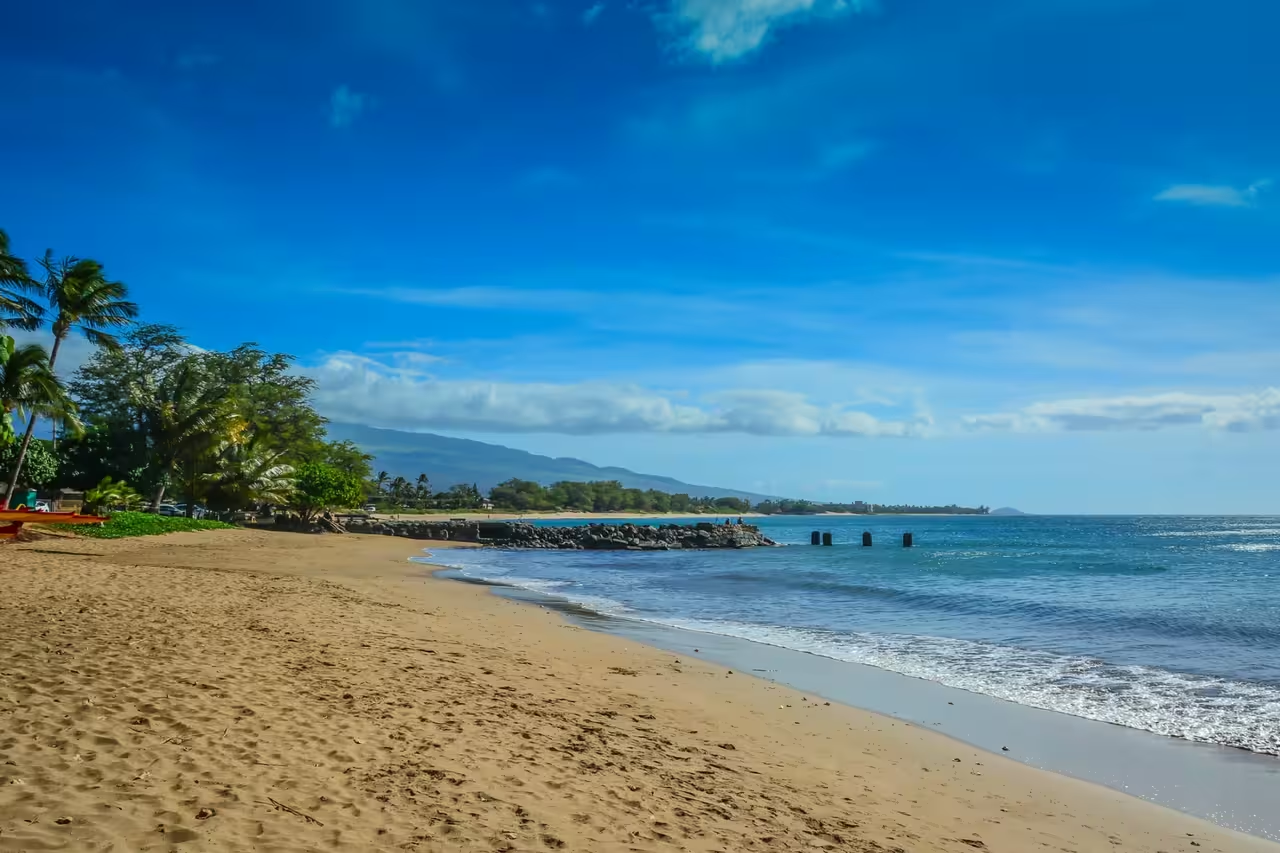
Five and a half hours from O'Hare. Same country. No passport. English everywhere. And scenery that makes grown adults cry on beaches.
I've helped a lot of Rockford-area families plan their first Hawaii trip — it's one of the destinations I get asked about most. The biggest surprise? It's not as complicated as it looks. The second biggest surprise? It's not as expensive as people fear — if you know what you're doing.
But 2026 Hawaii is different from the Hawaii you may have Googled two years ago. New reservation systems. New taxes. New rules for popular beaches and state parks. This guide covers all of it — the islands, the logistics, the real budget, and the stuff that trips up families who didn't know to ask.
Hawaii Time Zone for Illinois Travelers
Hawaii is 5–6 hours behind Illinois depending on daylight saving time. The jet lag actually works in your favor on the way there — you land in the morning feeling like it's afternoon. Get outside, get in the water, stay up until a reasonable local bedtime, and most families adjust within a day or two. Coming home is rougher; give yourself a buffer day before school or work if you can. The Haleakala sunrise at 10,023 feet requires leaving your hotel around 3 a.m. local time — for jet-lagged Midwest families in the first couple days, your body thinks it's 8 a.m. Work with it.
Why Hawaii for Midwest Families?
Most warm-weather vacations from Rockford involve a Caribbean beach, an all-inclusive resort, and drinks that never stop coming. Hawaii is something else entirely.
It's a U.S. state that feels like a foreign country. Volcanic mountains. Rainforests. Waterfalls you can hike to in an hour. Sea turtles on public beaches. White sand, black sand, green sand. The beach at Kaanapali. Waimea Canyon. The Big Island's lava fields meeting the ocean. None of it looks like anything in the continental U.S.
It's also a trip that rewards planning. Hawaii isn't an all-inclusive where you land, check in, and let the resort handle everything. There are islands to choose between, rental cars to book months in advance (I mean it), activities that sell out before you've even picked a hotel, and — in 2026 — reservation systems for beaches and parks you could walk right into a few years ago.
Which Hawaii Island Is Right for Your Family?
This is the most important decision you'll make. Each island has a completely different personality.
Oahu — The All-Rounder
Best for: First-time Hawaii visitors, families with kids, travelers who want the most for their money.
Oahu is Honolulu, Waikiki Beach, Diamond Head, North Shore, the Pearl Harbor Memorial. It's the most developed island and the most visited — for good reason. Most flights, most hotel options at every price point, most to do beyond the beach. If you've never been to Hawaii and you're bringing kids or a mixed group, Oahu is almost always the right call. You can always go deeper on other islands on a return trip.
- Don't miss: Waikiki Beach, Pearl Harbor, Diamond Head hike, North Shore surf scene (November–February), Polynesian Cultural Center, Hanauma Bay snorkeling
- Honest downside: Waikiki is crowded and commercialized. If you came for seclusion and "authentic Hawaii," you won't find it in Honolulu.
2026 heads-up: Hanauma Bay now requires advance reservations. You cannot just show up. Book through the city's reservation system before your trip — this is one of the best snorkeling spots on Oahu and I'd hate for you to miss it because you didn't know.
Maui — The Honeymoon Island (and the Family Favorite)
Best for: Couples on a romantic trip, families who want a high-quality beach experience, first-timers who want something slightly less developed than Oahu.
Maui is many people's idea of the perfect Hawaii island. World-class beaches — Kaanapali, Wailea, Makena. The Road to Hana (one of the best drives on earth). Sunrise at Haleakala summit, 10,023 feet above the clouds. Whale season runs December through March — humpbacks breaching right offshore. It's more expensive than Oahu and harder to get to. But for couples, anniversaries, and anyone who wants a step up in resort quality, Maui consistently delivers.
- Don't miss: Road to Hana, Haleakala sunrise, snorkeling at Molokini Crater, whale watching, Old Wailuku
- Honest downside: Road to Hana requires a full day and a driver comfortable with narrow one-lane roads. Not ideal with anxious passengers.
2026 Lahaina Update
Historic Lahaina was devastated by the 2023 wildfires. The first building permits for reconstruction were issued in April 2025. Lahaina Harbor reopened to tours in early 2026 — that's genuinely good news. But don't expect to see the town as it was. Rebuilding will take years. West Maui is still worth visiting — the beaches haven't changed — but plan your expectations accordingly. The community is still recovering, and your presence and spending genuinely support the rebuild.
Kauai — The Garden Island
Best for: Couples, outdoor enthusiasts, families with older kids who want to hike and explore.
Kauai is the oldest, most dramatic, most undeveloped island. The Na Pali Coast is one of the most spectacular coastlines on earth — sheer green cliffs rising from the Pacific, accessible only by boat, helicopter, or a serious hike. Waimea Canyon earns the "Grand Canyon of the Pacific" nickname. Hanalei Bay is postcard-perfect.
- Don't miss: Na Pali Coast boat tour or helicopter, Waimea Canyon, Hanalei Bay, Spouting Horn, Poipu Beach snorkeling
- Honest downside: Fewer flight options from the mainland. Limited resort selection. Not ideal for young kids who need lots of structured entertainment.
2026 heads-up: Haena State Park (gateway to the Kalalau Trail and Keʻe Beach) now requires advance reservations for parking and entry. Book early — availability goes fast.
The Big Island — Volcanoes and Variety
Best for: Families who want something educational, adventure-seekers, travelers who want to see something genuinely unlike anywhere else.
The Big Island is the youngest island and the most geologically active. Active volcanoes, black sand beaches formed by lava, snow on Mauna Kea (14,000+ feet), manta ray night snorkeling, astronomical observatories. It's a lot.
- Don't miss: Hawaii Volcanoes National Park (Kilauea), manta ray night dive/snorkel, Mauna Kea stargazing, black sand beaches, Captain Cook snorkeling at Kealakekua Bay
- Honest downside: Resorts are spread far apart — you need a car and need to commit to a region. Kona (west) is drier and where most resort activity is; Hilo (east) is lush and rainy.
- 2026 heads-up: Always check volcanic activity status at Hawaii Volcanoes National Park before visiting. Conditions can change — the park updates its site regularly.
Island Hopping: Is It Worth It?
Inter-island flights run $60–$150 per person each way. Add the time to get to the airport, check in, fly, get a new rental car, and check into a new hotel — and you've lost half a day. If you're staying seven nights, splitting between two islands often means neither stay feels complete.
My honest recommendation for most Rockford and Stateline-area families: Pick one island and go deep. You will not run out of things to do. A week on Maui or Oahu with one focused itinerary beats three rushed days on two different islands every time. Island hopping makes sense with ten or more nights, or on a return trip where you've already done one island thoroughly.
How to Get to Hawaii from Rockford, IL
No nonstop from RFD to Hawaii — you're connecting through O'Hare.
- O'Hare to Honolulu (HNL): United, American, and Delta fly nonstop. Flight time: 8.5–9 hours. Multiple daily departures.
- O'Hare to Kahului, Maui (OGG): United nonstop on select dates. American and Delta with one connection. Flight time: 9–10 hours.
- O'Hare to Lihue (Kauai) or Kona/Hilo (Big Island): One connection, usually through Honolulu or the West Coast.
Night flights to Hawaii are common — depart O'Hare 9–11 p.m., arrive Hawaii morning. This works beautifully for kids who can sleep on planes.
2026 Airline Note
Hawaiian Airlines officially joined the oneworld alliance in April 2026, and a combined reservation system with Alaska Airlines launched this spring. If you have miles with either carrier, check your balances and redemption options before booking — things shifted.
Book flights 4–6 months ahead. Hawaii airfare is volatile. I've seen fares swing $300–$500 per person based on when you search. Be flexible on departure day — Tuesday/Wednesday departures are often cheaper.
Best Time to Visit Hawaii from the Midwest
| Season | Weather | Crowds | Price | Best For |
|---|---|---|---|---|
| Jan–Mar | Warm (75–80°F), whale season; some rain | Moderate | Mid–High | Whale watching, Maui couples |
| Apr–May | Near-perfect; dry and warm | Low | Lower | Best value, uncrowded |
| Jun–Aug | Warm (80–85°F), humid, dry on most islands | Peak | Highest | Families with school kids |
| Sep–Oct | Excellent weather, occasional rain | Low | Lowest | Best deals of the year |
| Nov–Dec | Beautiful; whale season beginning; busier Dec | Moderate | Mid (holiday premium) | Shoulder value + whale season start |
My recommendation for most Northern Illinois families: April–May or September–October. Better prices, thinner crowds, and you won't be competing with every Midwestern family whose school district starts summer break the same week as yours.
How Much Does a Hawaii Vacation Cost? (2026 Budget Guide)
A real budget for a family of four, seven nights on Oahu:
| Expense | Budget | Mid-Range | Premium |
|---|---|---|---|
| Flights (O'Hare, all 4) | $2,400–$3,200 | $3,200–$4,400 | $4,400–$7,000+ |
| Hotel (7 nights) | $1,400–$2,100 | $2,800–$4,200 | $5,600–$10,500+ |
| Rental car (7 days) | $350–$500 | $500–$700 | $700–$1,200 |
| Activities (snorkel, Pearl Harbor, 2–3 tours) | $300–$600 | $600–$1,200 | $1,200–$2,500 |
| Food (mix of restaurant and grocery) | $700–$1,000 | $1,000–$1,600 | $1,600–$3,000+ |
| Travel insurance | $200–$350 | $300–$450 | $400–$600 |
| Estimated Total | $5,350–$7,750 | $8,400–$12,550 | $13,900–$24,800+ |
2026 Cost Reality Check
Hawaii's Transient Accommodations Tax increased January 1, 2026, and a new state "green fee" was added on top of that. On a $5,000 hotel stay, you could be looking at $800+ in taxes before the resort adds its daily destination fee. The budget table above reflects base rates — factor in taxes when you're doing the math. This is another place where I help families avoid sticker shock.
Flights are the largest single expense for Hawaii from the Midwest. Book early. Be flexible on departure day.
Rental car is non-negotiable on most islands. Book the same day you book your flights. Hawaii rental car inventory gets tight fast, especially during summer and holidays. I've seen families get stuck paying $500/day because they waited. Don't wait.
Food — Hawaii isn't cheap. A casual sit-down lunch for four runs $60–$100. Groceries from Times Supermarket or Foodland save significantly. A vacation rental with a kitchen can cut your food budget in half.
Hotel vs. vacation rental — a vacation rental gives you a kitchen, more space, and often more privacy. A resort gives you a pool, a beach bar, and activities for the kids that you don't have to plan. I help families weigh this based on their specific situation.
Hawaii Beach & Park Reservations in 2026: What You Need to Know
This is the biggest change to Hawaii travel in recent years — and the one most families don't know about until they're standing at a trailhead being turned away.
- Hanauma Bay (Oahu): Online reservations required. One of the best snorkeling spots on the island — book before your trip.
- Haena State Park / Keʻe Beach (Kauai): Advance parking and entry reservations required. Gateway to the Na Pali Coast — if this is on your list, lock it in early.
- Haleakala Sunrise (Maui): Reservations through Recreation.gov, available 60 days in advance. They sell out fast. Set a calendar reminder for 60 days out.
- Several Big Island state parks: Including Kekaha Kai, now charge entry and parking fees and may require reservations.
I track this so you don't have to. When I build your itinerary, I flag every site that needs a reservation and handle the timing so nothing gets missed.
Hawaii Ocean Safety for First-Time Visitors
Most Rockford families haven't spent much time in the Pacific. The ocean in Hawaii is beautiful — and it's genuinely powerful. Strong currents, dangerous shore break, and rapidly changing conditions make Hawaii's waters different from a lake or a resort pool.
- Swim at beaches with lifeguards, especially if your kids are young.
- Obey lifeguard flags and posted warning signs. Always.
- On Oahu's North Shore, winter swells (November–February) can be enormous — waves that are exciting to watch are not waves you should swim in.
- Never turn your back on the ocean.
- When in doubt, don't go out.
Millions of families swim safely in Hawaii every year. This is just information you deserve to have before you go.
What to Pack for Hawaii (Tips for Midwest Travelers)
- Reef-safe sunscreen — required by law. Hawaii bans sunscreens containing oxybenzone and octinoxate. This isn't optional — it's a state law protecting coral reefs. Stock up before you leave; it's harder to find on the island and costs more when you do.
- Rash guards for kids. The UV index in Hawaii is intense. Kids burn fast.
- Layers for summit activities. Haleakala summit is 10,023 feet. Mauna Kea is 14,000+. It is genuinely cold up there — not "cool," cold. Pack a sweatshirt and a light jacket, even if it's 85° at the beach.
- Water shoes. For lava fields, rocky beach entries, and anything on the Big Island. Regular flip-flops don't cut it.
- Seasickness medication. If you're doing a Molokini snorkel or Na Pali Coast boat tour, check with your doctor about Dramamine or prescription options. Open-ocean conditions can be rough, especially early morning.
Going with Aloha: How to Be a Good Guest
Hawaii is someone's home — not just a backdrop for your vacation photos. The islands have a deep cultural history, and traveling with awareness doesn't just make you a better guest. It genuinely makes the trip better.
- Learn two words: "Aloha" (hello, goodbye, love) and "Mahalo" (thank you). Say them sincerely. Locals notice and appreciate it.
- Sea turtles, monk seals, and humpback whales are federally protected. Touching them is illegal. Approaching too closely can result in fines. Give them space.
- Don't take rocks, sand, or shells. It's disrespectful to the land — and in some areas, illegal.
- Don't trespass for "secret spots." Many Instagram "hidden gems" involve private land belonging to Hawaiian families. Respect no-trespassing signs.
- Respect sacred sites. Hawaii has ancient temples (heiau) and cultural landmarks throughout the islands. Treat them the way you'd want someone to treat a church.
- Support local businesses. Eat at family-owned restaurants. Buy from local markets. Book Hawaiian-led tours. The tourism dollars that stay local do the most good.
- Shaka. The hand gesture (pinky and thumb extended, other fingers curled) is a genuine cultural expression of aloha. Use it freely. It goes a long way.
Maui especially deserves a mention here. The community is still recovering from the 2023 fires. Your presence and spending genuinely support the rebuild — but go with sensitivity.
Questions on travel insurance for Hawaii? See: travel insurance explained — what Rockford-area travelers actually need.