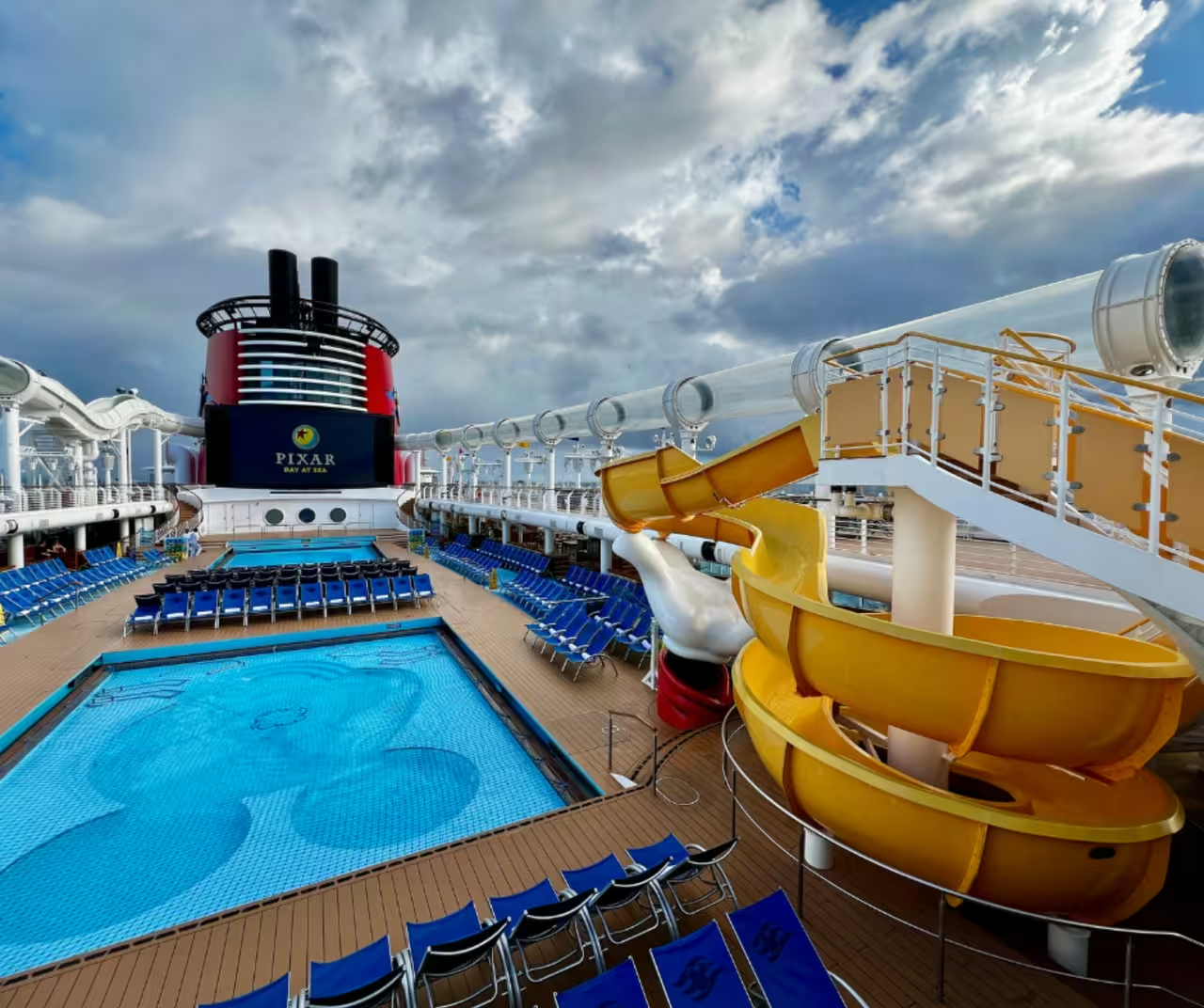
If you're wondering whether a Disney cruise can work for your autistic child, the short answer is yes, for a lot of families, but Disney Cruise Line offers flexible workarounds, not a formal autism program. Disney's current help comes through its Special Services team, a few line and seating accommodations, and a predictable ship routine. You won't find an autism certification, autism-specific priority boarding or kids' club exceptions in Disney's materials. Here's what Disney actually offers as of fall 2026, and how I plan around the gaps.
Is Disney Cruise Line autism-friendly?
Disney Cruise Line is autism-aware, but it is not autism-certified. It offers ways to avoid long waits and crowded spaces, but its youth clubs have firm participation rules, and it doesn't provide one-on-one support.
The official Disney document that still turns up first in many searches for "Disney cruise autism" is a PDF from January 2015. That predates the Wish, Treasure, Destiny and Lookout Cay. Disney's current Information Guide for Guests with Disabilities or Medical Conditions is dated September 2026, and it has an autism section. Everything in this article comes from that guide and Disney's current autism information page, unless I say otherwise.
What Disney does well for our kids:
- Routine. The same dining team follows you all week, the ship has a daily schedule in the Navigator app, and the layout becomes familiar fast.
- Character connection. For a child who loves Mickey, Elsa or Spider-Man, that buy-in can carry them through hard transitions.
- Private islands. Castaway Cay and Lookout Cay are controlled, Disney-run beach days instead of busy ports.
I cover the bigger picture of why ships work for sensory-sensitive kids in why autism families choose cruises. This article is just about Disney.
How do you request autism accommodations on a Disney cruise?
You request accommodations through Disney Cruise Line Special Services, either with the online Special Services form or by phone or email. Do it at least 60 days before you sail. Disney reviews each request individually.
Contact details from Disney's Help Center:
- Phone (US and Canada): (407) 566-3602
- Email: specialservices@contact.disneycruiseline.com
- Online form: the Special Services form, which Disney's guide says is available online
Disney's disabilities services page lists a cutoff of 7 days before embarkation for most requests, but the September 2026 guide says to submit the form at least 60 days before sailing. Go with 60.
In your request, describe plainly what's hard for your child (waiting, crowds, sudden noise, flashing lights, elopement, food limits), list specific asks (quieter table, muster questions, allergies), and note any medications or epinephrine injectors.
Not every request can be granted. Get confirmations in writing and bring a copy.
What happens on embarkation day and the muster drill?
Embarkation day is the hardest day of most Disney cruises for autistic kids: security screening, a busy terminal and a required in-person safety drill. A later port arrival time and good preparation make a real difference.
Port arrival times. Disney asks every guest to complete online check-in at least one day before sailing, and that's where you pick a port arrival time. Per Disney's guide, the first two hours of boarding are usually the busiest, so a later slot is often calmer. Check-in windows open earlier for repeat cruisers: 40 days before sailing for Pearl Castaway Club members, down to 33 days for Silver members (Castaway Club). First-timers go after all of them and get the leftover times. I log in for my clients the minute check-in opens.
What to expect at the terminal:
- Bag X-ray and metal detectors for everyone.
- Restaurants open when you board, but staterooms usually aren't ready until about 2:00 p.m. Plan a quiet spot and a snack for that gap.
The muster drill. Disney still runs an in-person Mandatory Guest Assembly Drill on embarkation day. The ship's alarm signals the start (the time is in the Navigator app). Your family gathers in your stateroom, walks to your assigned Assembly Station and checks in, and crew demonstrate lifejackets. You don't need to bring or wear one.
Many other lines now use digital "eMuster," so this catches families off guard. My prep:
- Warn your child about the alarm, and bring headphones.
- Be in your cabin before the drill so you can walk there calmly, not rush.
- Add the drill to your social story or visual schedule.
- Ask Special Services ahead of time if your child can't manage a crowded station.
What are the Oceaneer Club rules for kids with disabilities?
Disney's Oceaneer Club and Oceaneer Lab are for kids ages 3 to 10. Children must be fully toilet trained, able to take part in groups at normal counselor-to-child ratios, and comfortable with peers their own age and size. Counselors do not provide one-on-one care.
This is the big one for many of my families, so here are the details from Disney's guide and autism page:
| Policy | What Disney says |
|---|---|
| Ages | Oceaneer Club and Lab: 3–10. Edge (tweens): 11–14. Vibe (teens): 14–17. |
| Toileting | Must be fully toilet trained. No exceptions are listed. |
| Staffing | No one-on-one counselors, no specially trained counselors, no counselor-assisted medical care. |
| Security | Kids 3–10 wear an Oceaneer Band; an authorized adult checks them in and out. |
| Parent contact | Counselors reach you through the Navigator app, so download it before you sail. |
| Behavior | Children who become disruptive may be asked to leave. |
| Family option | Open House hours let parents and siblings join selected activities together. |
| Ages 3 and under | Group care at it's a small world nursery for a fee; no in-cabin babysitting. |
Sensory details I wish more families knew ahead of time, all from Disney's autism page:
- The club toilets are vacuum-style and loud when flushed.
- Kids wash their hands at automatic stations when they arrive, and sanitized wipes are available for kids who can't tolerate them.
- Some activities are loud or have flashing lights, and characters may drop in.
- The busiest times are usually sea-day mornings, between dinner seatings, embarkation day and the last evening. Plan drop-off for other times if crowds are hard.
If your child isn't toilet trained, or needs an adult nearby to stay regulated, plan on Open House times and family activities instead of drop-off. We talk about that before you book.
Which cabin works best for an autistic child on a Disney ship?
A verandah cabin midship, on a deck with cabins above and below it, is the setup I recommend most. It gives you a private outdoor space for decompressing and puts you away from the noisiest parts of the ship.
What to avoid, in general:
- Cabins directly under the pool deck (chair scraping, early morning setup).
- Cabins right above or below theaters, clubs or the main dining rooms.
- Cabins next to elevator banks or crew doors (hallway traffic and door noise).
- Far-forward cabins if your child is motion-sensitive.
Why verandahs help: a sensory break on the balcony at sunset, with the waves, can be the reset that keeps the evening going. If your child might climb or bolt, ask me about verandah door safety and the room setup before you choose, and raise it with Special Services too.
Inside cabins are fine for kids who sleep better in total darkness.
How does dining work, and can Disney handle allergies and food sensitivities?
Disney uses rotational dining: your family eats dinner in a different main dining room each night, at the same early or late seating, with the same servers following you. That consistent team is one of the most autism-friendly things about Disney.
Your servers learn by night two that your son only eats plain buttered noodles, or that your daughter needs her drink before she sits. Your rotation shows up in the Navigator app, so you can preview each room with your child. You can ask Disney to change the rotation ahead of time or see the Dining Change Team on embarkation day, but requests aren't guaranteed (TouringPlans).
Sensory note: some Disney restaurants, such as Animator's Palate and Worlds of Marvel, are built around shows and surprise effects. Ask Special Services (60 days ahead) or the restaurant crew onboard about seating. I'd rather preview a video of the room with your child than skip it, but room service is sometimes the right call on a hard night.
Allergies and diets, per Disney's guide:
- Table-service restaurants can substitute ingredients for peanut, tree nut, egg, fish, shellfish, soy, wheat, milk and sesame.
- For severe allergies, contact Special Services early and tell your Head Server once you board.
- There are no separate allergy-free kitchens, and cross-contact can't be ruled out.
- Crew can't store, cook or reheat food you bring from home.
Can autistic kids enjoy the shows, fireworks and character meets?
Yes, with some planning. Disney lets your family hold places in character lines and reserve theater seats, and it has relaxed movie showings, but some shows and the deck party fireworks are loud and bright.
Character meets. If waiting is hard, the rest of your party can stand in the queue while your child waits nearby with another adult, and then you all join up when it's your turn. Single parents can ask the Character Greeter for help (Disney).
Walt Disney Theatre. Crew help seat guests starting 30 minutes before showtime. A guest whose disability makes early arrival hard can hold a seat (plus one for a family member), but the seats may be released at showtime if the theater fills. Disney recommends back-row seats if you might need to leave. Some shows use strobes, sudden flashes, loud sounds and stage fog.
Family Movie Fun Time. In the ship's cinemas, the lights stay partly on, the volume is lower, and kids can talk and move around. This is Disney's version of a sensory-friendly film.
Water slides. There are no alternate entrances. Go right at opening or near closing.
Fireworks at sea. Fireworks happen on Pirate Night on Bahamian, Caribbean and West Coast sailings. The Wish, Treasure and Destiny end their pirate party with fireworks, and so do the Dream and Fantasy. Alaska sailings typically don't have them (Undercover Tourist). On the Magic and Wonder, check the Navigator app once you're onboard for that night's schedule. For noise-sensitive kids, watch from your verandah (if it faces the right way) or from an upper deck away from the stage, with headphones on.
What should you know about Castaway Cay and Lookout Cay?
Both private islands are Disney-run, with crew everywhere, which makes them calmer than most Caribbean ports. Castaway Cay has more beaches with mobility mats; Lookout Cay has an adult changing table, and some of its beach paths have stairs.
| Castaway Cay | Lookout Cay at Lighthouse Point | |
|---|---|---|
| Tram | Yes; personal wheelchairs allowed | Yes; same rules |
| Beach access | Mobility mats at Pelican Point, Palm Central, Serenity Bay | Mobility mats at True True 2 and Flippers & Fins; some beach paths have stairs |
| Water play | Spring-A-Leak splash area; Pelican Plunge platform (must swim) | Rush Out Gush Out water play |
| Restrooms | Accessible restrooms at several spots | All public restrooms accessible; adult/universal changing table near First Aid |
| Cabanas | One accessible cabana (ask Special Services) | Accessible cabanas available |
Details are from Disney's September 2026 guide. The adult changing table at Lookout Cay is a real plus for families with older kids who need one.
My tips: get off early, pick a beach near a tram stop, and remember the ship is there if your child needs a nap. I compare the islands further in my Disney Cruise Line family guide.
Which Disney ship and itinerary should a first-time autism family pick?
For a first Disney cruise with an autistic child, I usually suggest a 3- or 4-night Bahamas sailing on a Wish-class ship (Wish, Treasure or Destiny) from Port Canaveral. It's short enough to test how your child handles the ship, and it typically includes a private island day.
The fleet, quickly:
- Disney Wish, Treasure, Destiny (Wish class): newest and most polished. The Wish runs 3- and 4-night Bahamas sailings from Port Canaveral after its fall 2027 New York season. The Treasure sails Eastern and Western Caribbean from Port Canaveral. The Destiny starts the season in Fort Lauderdale and then homeports at Port Canaveral for the first time (BlogMickey).
- Disney Dream and Fantasy: a little older, moving to Fort Lauderdale for much of 2027–28. Often a better price.
- Disney Magic and Wonder: smallest and oldest. The Magic moves to Galveston, where some 7-night Bahamian sailings visit both private islands. Smaller can feel less overwhelming.
- Disney Adventure: homeports in Singapore, so it isn't practical from Northern Illinois.
Timing matters: fall 2027 through spring 2028 sailings opened to the general public on September 8, 2026, after a Castaway Club early window starting August 31 (BlogMickey). Disney pricing tends to rise as ships fill, and accessible and family-friendly cabin categories go early, so if you're eyeing next school year's spring break, now is the time.
From Rockford, check my guide to direct flights from RFD before defaulting to O'Hare, and always fly in the day before. For the last morning, Disney's Delayed Debarkation (versus Express Walk Off) is often the gentler choice.
How does Disney compare with Royal Caribbean for autism families?
Royal Caribbean markets a more formal autism program; Disney has the stronger character connection and consistent dining team. Neither is "best" for every child.
A disclosure: I'm a two-time Royal Caribbean Partner of the Year, and I also book Disney through Magical Vacation Planner, a Diamond-Level Authorized Disney Vacation Planner agency. I don't earn extra for steering you either way.
| Disney Cruise Line | Royal Caribbean | |
|---|---|---|
| Autism program | None; Special Services handles individual requests | Promotes an autism-friendly program; ask what's current for your ship |
| Muster drill | In-person assembly | Digital-first muster; confirm the current process for your sailing |
| Kids' club toileting | Must be fully toilet trained | Ask about current Adventure Ocean exceptions for kids with autism |
| Boarding | Pick an arrival time; no autism-specific priority listed | Ask about priority check-in when you book |
| Relaxed films | Family Movie Fun Time | Ask what's offered on your ship |
| Where Disney shines | Characters, same servers all week, calm private islands |
More in my best Caribbean cruises for autism families guide. In plain terms: if your child needs club support, isn't toilet trained, or can't manage a crowded muster station, Royal Caribbean is usually the easier fit. If your child lives for Disney characters and does well with routine and a little planning, Disney can be a wonderful trip.
How I help Disney cruise families with autism
I'm a mom of two autistic kids, an IBCCES Certified Autism Travel Professional and a travel advisor here in Rockford. I plan Disney cruises the way I'd plan my own family's trip. That means:
- An honest fit check first: Disney, Royal Caribbean or something else, based on your child, not on a brochure.
- Choosing the ship, itinerary length and specific cabin, away from the noise.
- Writing up your Special Services request and following up until you have confirmations.
- Grabbing the best port arrival time the moment online check-in opens.
- Building a visual day-by-day plan you can turn into a social story. See how I plan travel with two kids on the spectrum.
- Talking through travel insurance for a big prepaid trip.
My planning is free to you; the cruise lines pay me. Adding Disney World first? See my Disney World autism planning guide. You might also like Flying with an autistic child and Printable social stories for travel. For more help, see my autism travel planning and special needs travel planning pages.
Frequently asked questions
Does Disney Cruise Line have a DAS like the parks?
No. Disney's cruise ships don't use the Disability Access Service. Instead, a family member can hold a character-line spot, you can hold theater seats, and Special Services handles individual requests.
Can my autistic child go to the Oceaneer Club if they aren't potty trained?
Not under Disney's current rules. Kids must be fully toilet trained, and Disney doesn't list an exception. Open House hours let you go in together.
Is Disney Cruise Line autism certified?
No. Disney offers accommodations, but it doesn't hold an autism certification. If a formal autism program matters to you, ask me what other lines currently offer.
Do I have to attend the muster drill on a Disney cruise?
Yes. Every guest attends an in-person assembly drill on embarkation day. You don't need lifejackets. Ask Special Services at least 60 days ahead if the crowd will be a problem.
How long should our first Disney cruise be?
For most autism families, 3 or 4 nights on a Wish-class ship from Port Canaveral is a good first test. If that goes well, a 7-night sailing is the next step.
When should I contact Disney Special Services?
At least 60 days before your sail date, and earlier for severe allergies. Keep written confirmations.
Not sure your child is ready for a Disney cruise? Call or text me at (815) 904-9755, or use the contact form at magicbeantravel.com. We'll talk about your child first, then the ship. You can also read more about my ocean cruise planning and first cruise tips.
Sources
- Disney Cruise Line: Information Guide for Guests with Disabilities or Medical Conditions (September 2026, PDF)
- Disney Cruise Line: Information for Guests with Autism
- Disney Cruise Line: Services for Guests with Disabilities
- Disney Cruise Line Help Center: Autism
- Disney Cruise Line: Castaway Club
- Disney Cruise Line: Information for Guests with ASD (January 2015, PDF, outdated)
- BlogMickey: Disney Cruise Line fall 2027–spring 2028 itineraries
- TouringPlans: What is rotational dining?
- Undercover Tourist: Disney cruise fireworks
- Cruise Hive: Disney cruise ships by age